Gwalior Fort
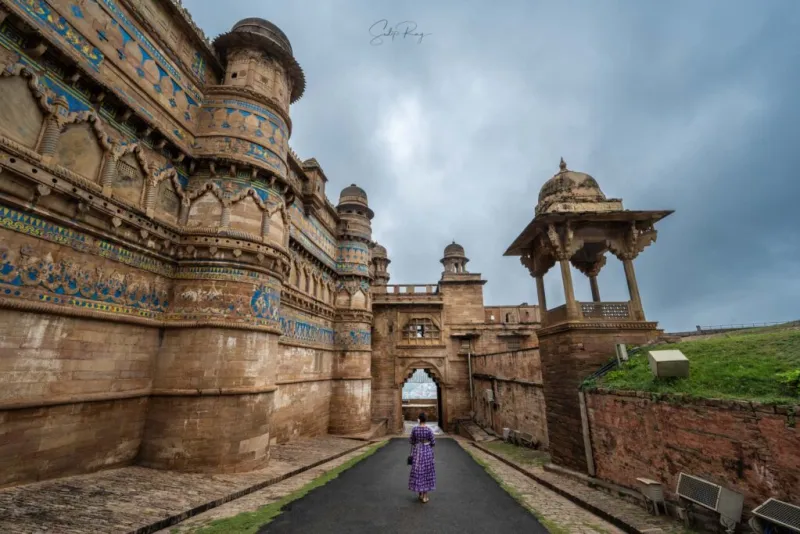
The most important landmark in the city, Gwalior Fort stands on a steep land of sandstone. This grandeur was built to honour the saint Gwalipa. As per folklore, when the monarch was ill, sage Gwalipa offered him water from a sacred pond to cure him, that is still inside the Gwalior fort complex. The fort has witnessed important incidents, imprisonments, conflicts, and jauhars. Jain tirthankara statues carved into the rock face border the steep road leading up to the fort. The fort’s majestic outside walls, which are two miles long and 35 feet high, continue to remain, attesting to its reputation as one of India’s most impregnable forts. It has been added to the Tentative list of UNESCO World Heritage Sites, highlighting its historical and cultural significance.
Teli ka Mandir
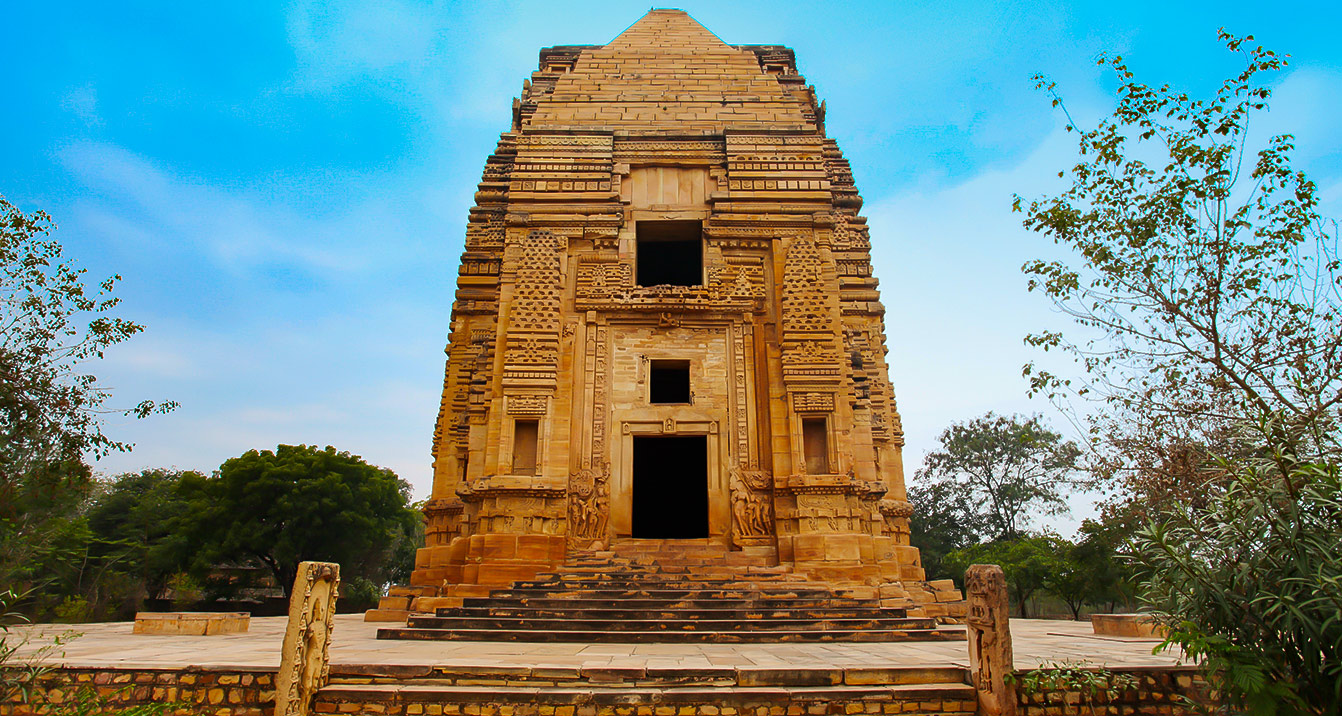
Teli Ka Mandir, a historic religious temple renowned for its Dravidian architecture and intricate artwork, is the tallest building inside the Gwalior Fort complex. As per folk stories, the temple was built with the money donated by oil merchants. Hence, the name Teli Ka Mandir came into existence. Tourists can also find this information in the inscription written on the main gate of the temple. It is about 100 feet tall, and its design combines Hindu and Buddhist elements. The earliest temple in the fort was built either in the eighth or eleventh century. It is dedicated to Lord Vishnu and features constructions within with coiled serpents and river goddesses as well as Lord Vishnu in the guise of his mount, “Garuda.”
Tansen Tomb
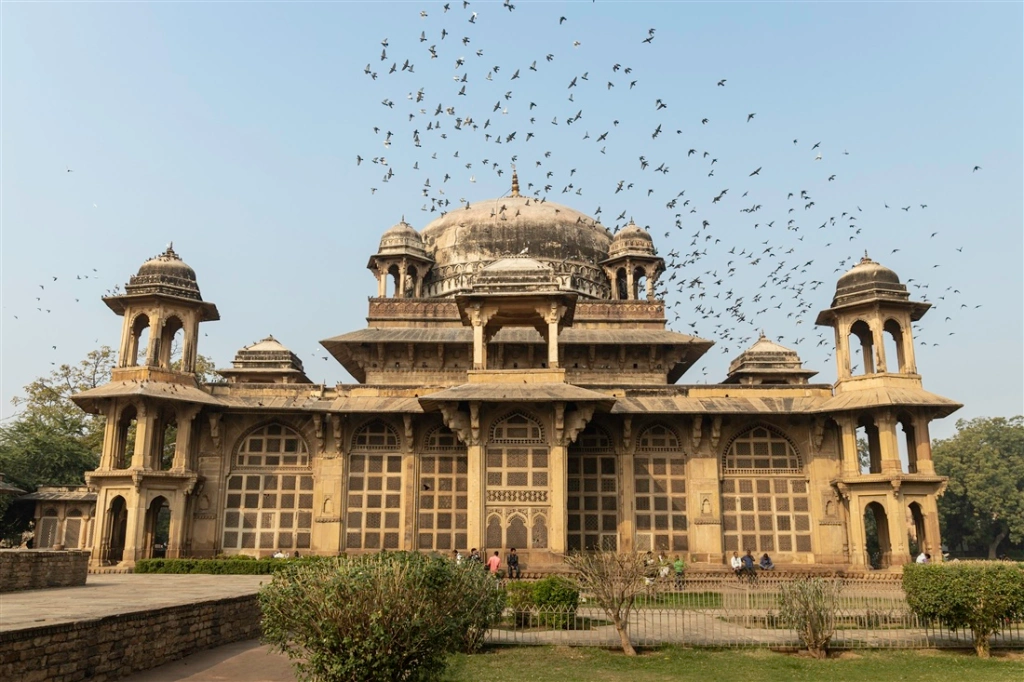
A simple structure of the Tomb of Tansen can be seen a short distance away from the Tomb of Muhammad Ghaus. Tansen was one of the legends and pioneers of Indian classical music and the most famous singer during Akbar’s rule and one among the nine jewels of the court.
Every year in November and December, a grand music event is held at his tomb. Here, musicians and artists from all over the world come to honour the legendary Indian musical maestro Tansen. India-wide performers of both vocal and instrumental music are invited.
Apart from tourist attractions in Gwalior, there are many excursions around the city which can also be explored.
Moti Mahal
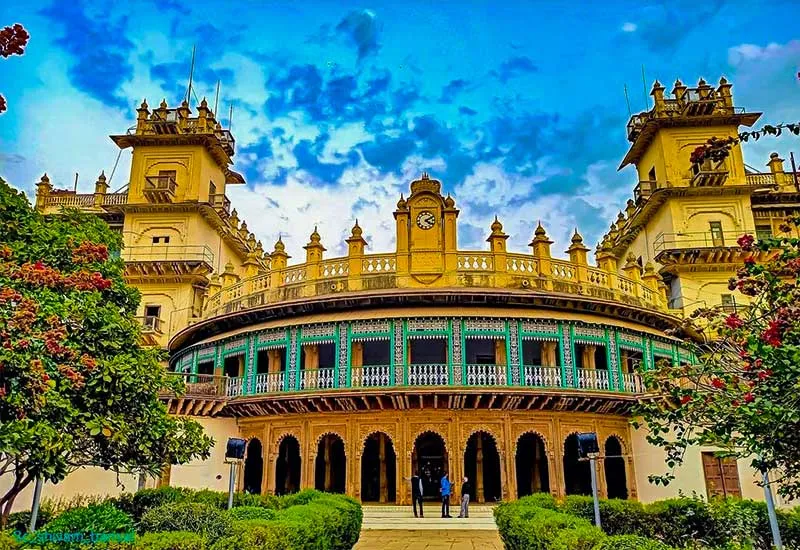
The 19th-century Moti Mahal, one of the most historic structures in the city, is surrounded by beautiful gardens and fountains. It was originally a Madhya Bharat Government office, but it is currently home to government offices. Highlights of this palace include the wall murals, mosaics, and gorgeous tempera colours that represent Ragas and Raginis.
Gujari Mahal
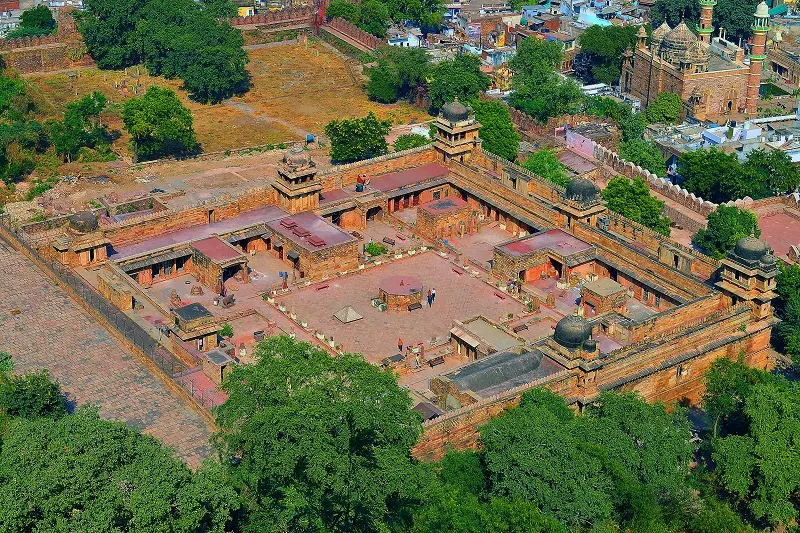
The palace was built by King Man Singh for his beloved queen Mrignayani. She was one of the queens of Raja Mansing. King’s love and devotion towards his brave Gujar Queen, Mrignayani, is memorialised in the Gujari Mahal from the fifteenth century.
While the interior of Gujari Mahal has been transformed into an archaeological museum housing rare artefacts, some of which date back to the first century A.D., the exterior building has survived in an almost perfect condition of preservation. Many medieval architectural wonders can be found inside the fort. Their perfection of form has endured the ravages of time, despite the fact that many of these were destroyed by the iconoclastic Mughals. The statue of Shalbhanjika from Gyraspur, the tree goddess and miniature representation of perfection, is very noteworthy. The curator of the museum is in charge of keeping the statue, and visitors may view it upon request.
Article by
Akaash S Kumar
 using WordPress and